
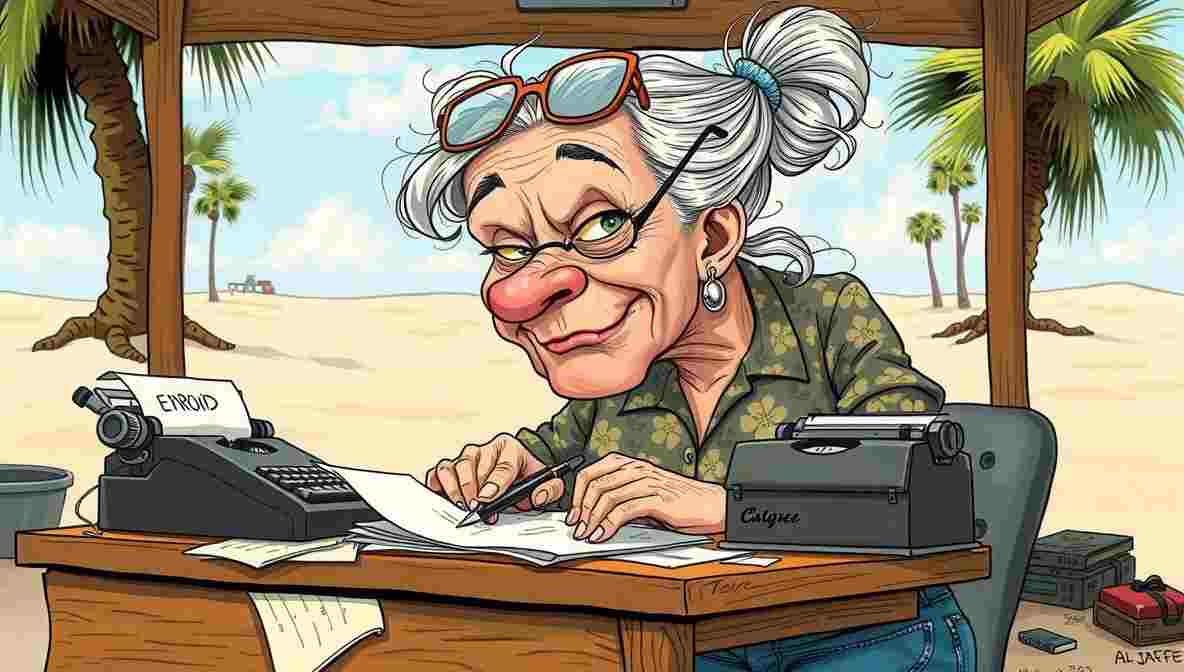
Hollywood writers confront a defining moral question: tool or threat?
Screenwriters and the AI Ethics Reckoning
A quiet but consequential debate has been building inside Hollywood’s writing community for the past two years, and it is no longer quiet. Screenwriters across the industry are grappling with a question that cuts to the core of their profession: Is artificial intelligence a useful tool, a creative threat, or something far more ethically complex than either label allows?
The Stakes Are Not Abstract
The 2023 WGA strike put AI front and center in labor negotiations, resulting in contract language that prohibits studios from using AI-generated material as the basis for a screenplay or from using it to rewrite a credited writer’s work. The agreement was historic, representing the first time a major entertainment union had secured protections specifically targeting generative AI. But the ink was barely dry before the conversation evolved into something murkier. Contracts govern what studios can demand. They do not govern what individual writers choose to do on their own time, with their own scripts, in their own creative process.
That gray zone is where the ethical tension now lives. Writers are reporting that they are quietly using tools like ChatGPT, Claude, and Gemini for brainstorming, research, and structural feedback, while publicly maintaining that they are anti-AI. The fear of social and professional stigma within the guild is real. As IndieWire reported, even “Contagion” screenwriter Scott Z. Burns, who openly documented his AI experiment for an Audible podcast, described significant anxiety about how his peers would react. “There are a lot of people in my guild,” Burns said, “some of whom I’m very close friends with, who find AI to be an affront.”
The Philosophical Divide
The ethical arguments on both sides of this debate deserve honest treatment. Those opposed to AI in the creative pipeline argue that large language models are trained on copyrighted material without compensation to the original authors, that the technology displaces human creative labor, and that it produces derivative output incapable of genuine originality. These are serious and largely substantiated concerns. The ongoing class-action lawsuits filed by authors and visual artists against AI companies rest on exactly these grounds.
On the other side, proponents argue that all writers are trained on the work of those who came before them, that tools have always shaped craft, and that the real danger is not using AI but ceding the conversation to those who will use it without any ethical reflection at all. They point to the ways screenwriters already use software, databases, and research tools that aggregate the labor of others, and they question where the principled line between tool and theft actually falls.
Where the Industry Actually Stands
The honest answer is that Hollywood is deeply divided, and the division does not map neatly onto seniority, politics, or genre. Veteran writers who built their careers on original spec scripts tend to be the most protective of the human-only creative model. Younger writers who entered the industry during the post-strike contraction of the market, when fewer staffing opportunities exist than at any time in decades, are more likely to experiment with AI quietly and pragmatically. They are trying to survive in an industry that has already been reshaped by streaming economics before AI entered the picture.
The WGA’s Minimum Basic Agreement provides a contractual floor, but it does not resolve the ethical questions that arise in the spec market, in the development process, or in the growing number of independent productions that operate outside the guild’s jurisdiction. Outside the guild, there are no rules at all, only choices.
The Human Element AI Cannot Replace
What emerges consistently from writers who have tested AI tools honestly is a grudging acknowledgment that the technology is genuinely useful for certain tasks and genuinely incapable in others. It can brainstorm, list permutations, summarize research, and organize structural options quickly. What it cannot do is write a scene that captures the interior life of a damaged human being with precision, specificity, and earned emotional resonance. That distinction matters enormously, because scenes are the fundamental unit of screenwriting. Premises and outlines are where the work begins. Scenes are where it lives or dies. No studio executive ever greenlit a movie because the outline was brilliant. They greenlighted it because the pages were.
The PEN America report on AI and creative workers makes clear that these concerns extend across the literary community, not just film. Writers of fiction, journalism, and poetry face analogous pressures and have arrived at similarly fractured consensus positions.
A Question of Attribution and Credit
Perhaps the most acute ethical issue is credit. Under current WGA rules, AI cannot receive writing credit. But what about a script that was substantially shaped by AI brainstorming, structured around AI-generated plot options, and then polished by a human writer? At what point does human contribution become merely editorial? These are not rhetorical questions. They will be litigated, both legally and professionally, as the technology matures and as the line between assistance and authorship continues to blur.
The U.S. Copyright Office has issued guidance stating that works generated solely by AI without human creative input are not eligible for copyright protection. But it has also acknowledged that works involving AI as a tool, where a human author makes meaningful creative decisions, occupy uncertain legal ground that will require case-by-case analysis.
What Responsible Practice Looks Like
Several writers and industry observers have begun advocating for a transparency standard: disclose when and how AI was used in the development of a project, treat it as one might treat a research assistant or development executive, and ensure that the final creative vision and all scenes are the product of human imagination. This model does not resolve every ethical tension, but it at least brings the conversation into the open, where it can be evaluated honestly rather than practiced in the shadows. The stakes of this debate extend beyond guild politics. They reach into the question of what stories are worth telling, who gets to tell them, and whether the voices that emerge from the next generation of screenwriting will be human enough to tell us something true about ourselves.