
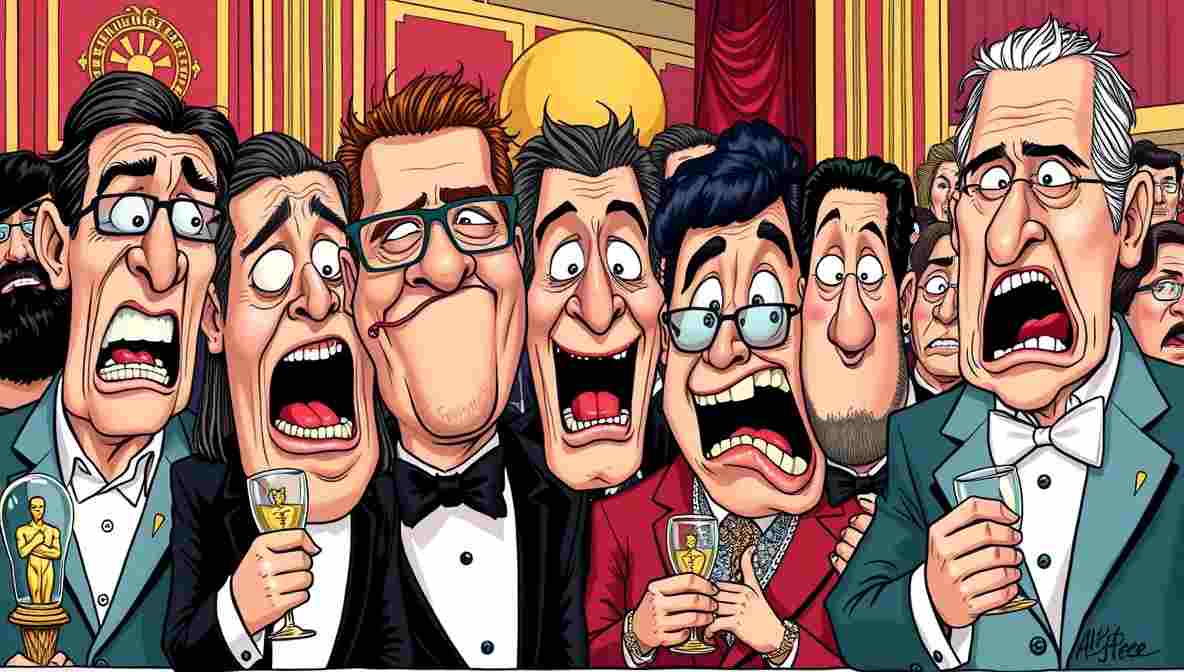
Paul Thomas Anderson’s juggernaut meets Ryan Coogler’s long-overdue reckoning — with Hamnet and Sentimental Value waiting in the wings
The 2026 BAFTAs: One Battle After Another Leads, But Can Sinners Make History?
The British Academy of Film and Television Arts Awards, long regarded as one of the most reliable bellwethers for the Academy Awards, will be presented this coming Sunday. Heading into the final stretch, the race has crystallized around a small handful of films — and one uncomfortable question about how much the BAFTA voting body has changed.
Paul Thomas Anderson’s One Battle After Another, which has swept through the precursor awards season with unusual dominance — winning at the Golden Globes, Critics Choice, and the Directors Guild — carries 14 nominations into Sunday’s ceremony and is widely predicted to claim Best Picture, Best Director, and Best Adapted Screenplay. Its odds for Best Picture sit at approximately 83 percent, according to the combined expert and user predictions at Gold Derby.
The Sinners Question and the History of BAFTAsSoWhite
But the more interesting conversation heading into Sunday is about Ryan Coogler’s Sinners, and whether the BAFTA body can overcome a documented history of bias against films centered on Black experiences. The hashtags #BAFTAsSoWhite and #BAFTAsStillTooWhite have trailed the organization for years, pointing to a pattern of nominations and wins that critics argue has systematically underrepresented the work of Black filmmakers and performers. Coogler has firsthand experience with this pattern: his earlier film Black Panther was notoriously snubbed by the British body in a year when its cultural impact was undeniable.
Sinners — Coogler’s blues-infused vampire film set in the 1930s Jim Crow South, exploring systemic racism through the lens of genre horror — is the kind of film that would historically have struggled at the BAFTAs. And yet it enters Sunday as the projected leader in four categories: Best Original Screenplay, Best Casting, Best Cinematography, and Best Score. Its predicted screenplay win, at approximately 56 percent, represents the film’s strongest single prospect and would be a significant recognition of Coogler’s writing.
The official BAFTA website tracks live nominations and has in recent years published transparency reports and reform efforts aimed at diversifying its voting membership, a direct response to the criticism the organization has faced.
Hamnet and the Case for British Story
If One Battle takes the night’s biggest prize, the British film with the strongest supporting claim is Hamnet, based on Maggie O’Farrell’s novel about the marriage of William Shakespeare and his wife Agnes, and the death of their young son. The film carries a near-certain predicted win for Jessie Buckley in Best Actress, with her odds sitting at approximately 97 percent, and is the overwhelming favorite for Best British Film. Buckley’s performance as Agnes is, by most accounts, the emotional center of a film that translates one of the year’s most celebrated literary adaptations into genuinely moving cinema.
The Supporting Races and Sentimental Value
Joachim Trier’s Norwegian family drama Sentimental Value, which arrives at the BAFTAs with a strong showing from the supporting categories, is predicted to win Best Foreign Film and is competitive in both supporting performance races. Stellan Skarsgard leads Best Supporting Actor at approximately 90 percent for his role as an estranged film-director father. Inga Ibsdotter Lilleaas, who plays his daughter Nora, is locked in a tighter race with Teyana Taylor for Best Supporting Actress, with Lilleaas carrying approximately a 48 percent probability against Taylor’s 42 percent. The closeness of that race makes it the evening’s most unpredictable major contest.
Timothee Chalamet is the heavy favorite for Best Actor for his portrayal of the title table tennis champion in Marty Supreme, sitting at approximately 88 percent, with Leonardo DiCaprio in second at about 7 percent. Guillermo del Toro’s Frankenstein leads several below-the-line categories including Costume Design, Makeup and Hair, and Production Design. The racing film F1 is expected to take Best Film Editing and Best Sound.
What Sunday Means for the Oscars
The BAFTA ceremony functions as a crucial final signal before Academy voting concludes. A strong performance by One Battle After Another would cement its Oscar trajectory, while any upset — particularly in Best Picture or Best Director — would immediately recalibrate the awards conversation. Whether Sinners can claim its predicted four wins and, in doing so, mark a genuine shift in BAFTA’s historical blind spots, is the narrative question that will define Sunday’s broadcast.
Readers who want to track every category and update their own predictions can consult Gold Derby’s full BAFTA odds. For historical context on the diversity debate and what reform has and has not accomplished, the Guardian’s BAFTA coverage has tracked the ongoing conversation in depth. And Deadline Hollywood’s BAFTA page is the best single source for real-time ceremony news on Sunday.