FEATURE FILM TREATMENT
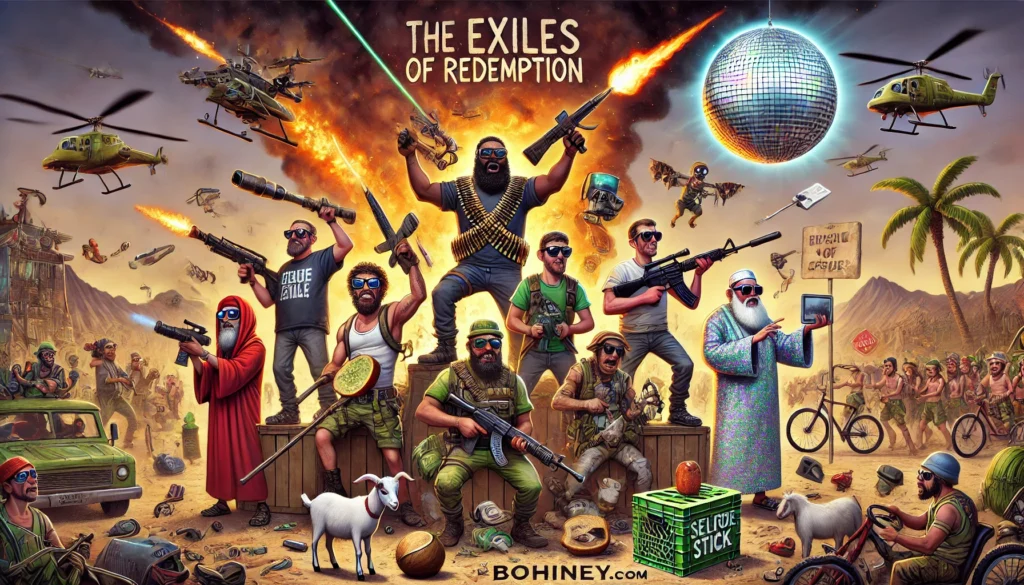
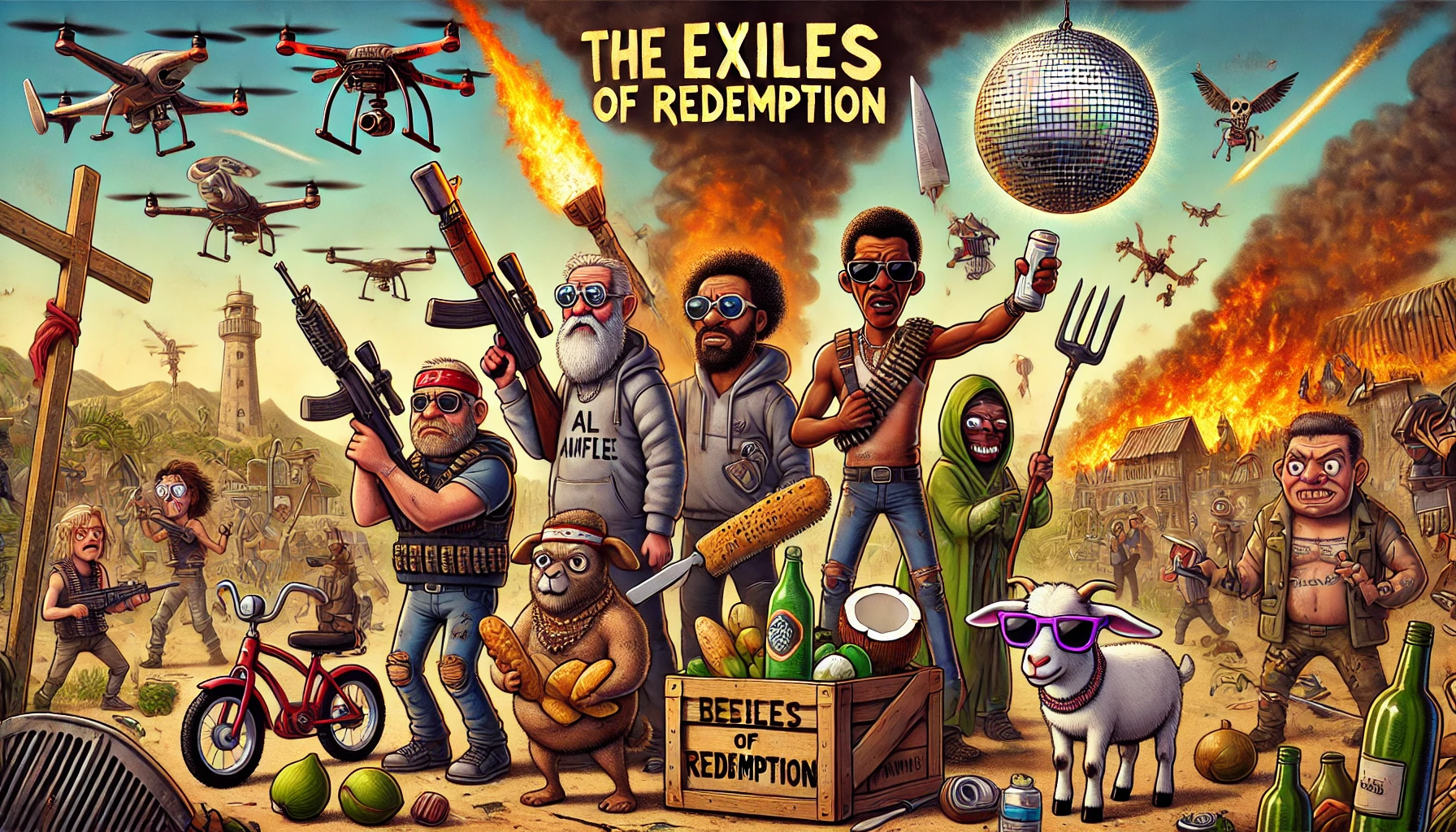
Title: The Exiles of Redemption
Genre: Action Drama / Redemption Thriller
Tone: Serious and emotional with bursts of guerrilla warfare intensity and understated, culturally diverse humor
The Exiles of Redemption – Logline:
When six foreign men with criminal pasts are deported to a war-torn village in South Sudan as part of an experimental rehabilitation program, they find themselves facing a ruthless warlord. With nowhere to run and nothing left to lose, they band together to defend the village and themselves—transforming from broken men into legendary freedom fighters.
Trump Accidentally Deports Martial Arts Champion to South Sudan
I. OVERVIEW
Setting:
South Sudan, 2025. A post-conflict nation rebuilding itself amid tribal tensions, foreign meddling, and rogue warlords. The landscape is raw, beautiful, dangerous—a mixture of scorching savannas, river-fed valleys, and ghost towns. The story begins in a dusty UN-run refugee station outside of Juba and later transitions into rural villages, jungle training camps, and a final fortress-like compound deep in the bush.
Themes:
-
Redemption and second chances
-
Brotherhood and cross-cultural solidarity
-
The corruption of justice systems
-
Colonialist echoes in modern geopolitics
-
Human resilience in absurd circumstances
Format:
Feature-length, 120 minutes.
Structured in four acts with a cold open.
II. CHARACTERS
The Exiles
1. Liam O’Connor (Australia) – 38
A former biker gang enforcer, Liam is all tattoos, broken knuckles, and dry sarcasm. Having spent 15 years in U.S. prison for manslaughter, he’s physically capable but emotionally stunted. He bonds surprisingly well with kids and goats.
2. Nigel Thompson (UK) – 55
A disgraced City of London banker convicted of a massive Ponzi scheme. Eloquent, educated, and riddled with guilt. He treats the villagers with British politeness and passive-aggressive optimism.
3. Nguyen Van Duc (Vietnam) – 31
A quiet IT worker wrongly convicted of cyberterrorism. An innocent man, his story carries the emotional weight of the film. He journals obsessively and becomes the group’s moral compass and documentarian.
4. Chinedu Okoro (Nigeria) – 43
A former child soldier turned mercenary who served time for arms trafficking. Disciplined and terse, he hides a deeply spiritual side. He trains villagers with military precision but attends mass every Sunday under a tree.
5. Carlos Ramirez (Venezuela) – 27
A political protestor and bomb-maker whose only crime was resisting dictatorship. He’s witty, hot-headed, and wildly creative—building weapons out of cooking utensils and chemical fertilizer.
6. Ivan Petrov (Russia) – 46
A jaded hacker-for-hire and dark web personality. He was imprisoned for breaching U.S. defense databases and now hacks solar panels to power rice cookers. Cynical, brilliant, and obsessed with classic cartoons.
Supporting Characters
General Madu Deng – 50s
Charismatic and cruel, the local warlord rules by fear and superstition. Wears jewelry made of bone and brags he once shot a UN tank for “looking at him wrong.”
Alek Chol – 19
A local boy who idolizes the exiles and becomes their apprentice and eventual narrator. Alek speaks in poetic metaphors and always carries a goat named Mandela.
UN Officer Miriam Basson – 40s
A South African official who runs the deportation program. Idealistic but under political pressure, she sees the chaos unraveling but can’t stop it.
III. STORYLINE (FULL PLOT OUTLINE)
COLD OPEN
Montage:
Sweat. Shackles. Deportation notices.
The six men are shown in various prisons across the U.S., all being told they are being transferred “to a less costly jurisdiction”—South Sudan.
Smash cut to them arriving in Juba, dazed, sunburned, and surrounded by chaos.
ACT I: LAND OF NO RETURN
The men are dumped in Boro Nyang, a struggling village two hours from the capital. There’s no real infrastructure, just UN tents, one water pump, and a dirt football field. The villagers are suspicious. The exiles are more interested in escaping each other than bonding.
At first, they split off.
-
Liam tries to build a fence and accidentally lets 20 goats loose.
-
Nigel tries to teach economics and gets laughed out of the village.
-
Nguyen befriends a local girl who teaches him Dinka phrases.
-
Chinedu goes to mass alone and silently watches.
-
Carlos builds a crude distillery and gets half the village tipsy.
-
Ivan installs a satellite dish on a termite mound and live-streams pirated cricket.
Their presence begins to have minor, mostly chaotic effects on the village. The tone here is fish-out-of-water with dramatic shadows.
ACT II: THE WOUNDS THAT BIND
Over time, a sense of responsibility emerges.
Nguyen begins teaching literacy to children. Liam starts repairing homes after a sandstorm. Chinedu notices child soldiers from nearby camps wandering near the village.
Alek Chol becomes their shadow, filming everything with an ancient camcorder from Ivan.
But peace is short-lived. One morning, a convoy of Toyota pickups enters Boro Nyang. It’s General Madu Deng and his militia. He demands loyalty—or else. The chief is executed in front of the villagers.
The men are tied up, beaten. Nguyen is accused of being a spy. The warlord installs guards. The village is seized.
Later that night, Ivan hotwires a generator and disables the fence. Liam kills a guard with a piece of rebar. The exiles escape into the jungle with a handful of villagers.
This is their breaking point. The exile has become a war.
ACT III: THE GUERRILLA AWAKENING
Hidden deep in the bush, the exiles build a jungle base. What follows is a training montage meets redemption arc.
-
Chinedu trains the villagers in guerilla tactics.
-
Nigel forges makeshift currency to disrupt the warlord’s black market.
-
Carlos builds IEDs out of firewood.
-
Ivan builds signal jammers and remote drones.
-
Liam becomes a father figure to orphans.
-
Nguyen records everything and begins radio broadcasts.
Raids begin. At first small. Ambushes. Sabotage. Soon, they liberate nearby villages. Word spreads. The exiles become legends.
Alek narrates:
“They came as shadows, but became our swords.”
General Madu retaliates by taking hostages—including Nguyen’s student and Mandela the goat. The war escalates.
ACT IV: THE FINAL STAND
A brutal siege is planned on Madu’s stronghold: an abandoned colonial fort. The exiles march with 300 villagers. Nguyen’s radio recordings are used to spread disinformation and confuse the militia.
The final 30-minute sequence is brutal and cathartic:
-
Booby traps in banana groves
-
Drone attacks during prayer chants
-
Liam and Chinedu fight back-to-back
-
Ivan sets Madu’s mansion lights to strobe until epileptic collapse
-
Nigel delivers the line: “Looks like compound interest… in blood.”
Carlos delivers the kill shot to Madu while screaming “¡Libertad!”
Nguyen rescues the children and the goat. The village erupts in cheers.
EPILOGUE
One year later.
-
A new government awards the exiles honorary citizenship.
-
Nguyen’s innocence is acknowledged. He’s offered asylum but declines.
-
Ivan now teaches local kids how to code.
-
Carlos runs a peace radio station.
-
Liam and Nigel co-lead a building co-op.
-
Chinedu organizes inter-village peace patrols.
-
Alek’s documentary wins an international film award.
Final line:
“They called us criminals. But here, they called us protectors.”
IV. VISUAL STYLE & TONE
Cinematography:
-
Wide shots of scorched earth, lush jungles, and parched villages.
-
Gritty handheld for battle scenes.
-
Hyperrealistic light—dust, smoke, sweat.
-
Color grading: Yellowed warmth to reflect sun and survival.
Music:
-
Blend of traditional South Sudanese instruments, Afrobeat, and minimalist electronic.
-
Underscored with occasional punk-folk for character flavor (think The Motorcycle Diaries meets Black Hawk Down).
Dialogue:
-
Naturalistic, with cultural accents preserved.
-
Witty sarcasm and cultural misunderstandings used for comic relief.
-
Swearing is minimized but impactful. Emphasis on emotional stakes.
V. COMPARABLE FILMS
Here are four films that thematically and structurally paved the way for The Exiles of Redemption—stories about men with no country, forced to find meaning, identity, or justice in the margins of the world. Each blends displacement, redemption, and gritty geopolitics in a way that parallels the tone and ambition of Exiles:
1. The Terminal (2004)
Director: Steven Spielberg
Starring: Tom Hanks
Why It Paved the Way:
A man from a fictional Eastern European country becomes stateless after a coup, and is stranded in JFK airport. Viktor Navorski’s inability to return home or enter America mirrors the “man with no country” motif. While comedic and charming, it subtly critiques bureaucracy and immigration policy. The emotional center—finding purpose when systems fail—is deeply resonant with Exiles.
“Navorski lived in an airport. The Exiles live in a political no man’s land. Both prove borders can cage a person, but not their humanity.”
2. The Last King of Scotland (2006)
Director: Kevin Macdonald
Starring: Forest Whitaker, James McAvoy
Why It Paved the Way:
Set in Uganda under Idi Amin’s dictatorship, this film follows a naive Scottish doctor who gets pulled into the regime’s horrors. Like the exiles in South Sudan, he is a foreigner drawn into a political storm, gradually shedding his outsider’s perspective. It’s a cautionary tale of complicity and survival—perfect tonal DNA for the darker aspects of Exiles of Redemption.
“A foreigner in Africa who thinks he can stay neutral—until reality intervenes violently.”
3. Beasts of No Nation (2015)
Director: Cary Joji Fukunaga
Starring: Idris Elba, Abraham Attah
Why It Paved the Way:
This film captures the raw brutality of guerrilla warfare in Africa through the eyes of a child soldier. The gritty realism, moral ambiguity, and haunting visuals mirror the aesthetic Exiles strives for—especially the journey from victim to militant to something… undefined. While more tragic and less redemptive, it showed audiences will engage with African war dramas that don’t sanitize pain.
“Where Exiles offers hope, Beasts showed the world what hope costs.”
4. The Dirty Dozen (1967)
Director: Robert Aldrich
Starring: Lee Marvin, Charles Bronson
Why It Paved the Way:
This WWII classic is the patriarch of all redemption-through-combat narratives. Twelve convicted criminals are offered a chance at redemption if they survive a suicide mission behind enemy lines. Exiles of Redemption updates the formula—criminals from across the globe, deported and disowned—but retains the essence: damaged men, no way out, and a dangerous mission that becomes their spiritual rebirth.
“Before there were drones and dictatorships, there was a prison bus and a mad general. And the original misfit squad.”
BONUS COMPARISONS:
-
Blood Diamond – Foreigners entangled in African conflict, moral awakening through violence
-
Hotel Rwanda – One man protecting innocents during a genocide
-
Three Kings – Ex-soldiers on a rogue mission in the Middle East, cynical but heartfelt
-
Children of Men – Statelessness, immigration crisis, and a world that has forgotten how to hope
In Short:
The Exiles of Redemption is part The Dirty Dozen, part Beasts of No Nation, with the conscience of The Terminal and the political urgency of The Last King of Scotland. It stands on the shoulders of these cinematic giants—but tells a story no one else dared to:
Six stateless men become legends in a country that never asked for them… but desperately needed them.
-
The Dirty Dozen
-
Black Hawk Down
-
The Last King of Scotland
-
The Shawshank Redemption
-
Beasts of No Nation
-
Narcos meets Hotel Rwanda
VI. TARGET AUDIENCE
-
Fans of gritty political thrillers and redemption dramas
-
International audiences, especially African, Latino, and Asian markets
-
Streaming platforms seeking morally complex action stories
-
NGOs and activists interested in immigration and post-conflict narratives
VII. CLOSING
“The Exiles of Redemption” is a powerful, emotional, and timely film. It explores what happens when the world throws away six broken men—and how, against all odds, they find humanity again by defending others. It is a story of forgiveness, warfare, love, loyalty, and the dignity that can rise from dirt.
Auf Wiedersehen.